Stance for Android
At home on Android.
On every screen.
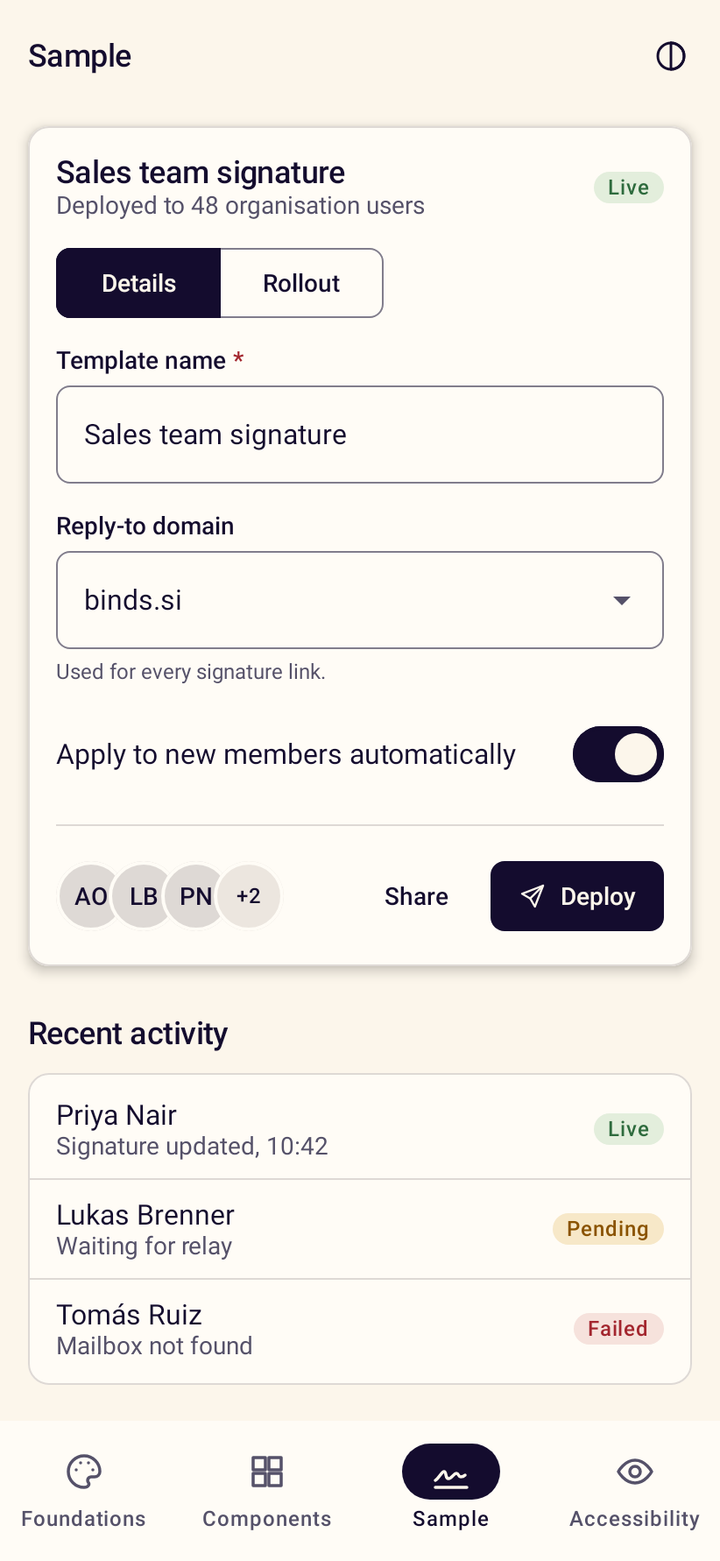
Jetpack Compose components for phones, tablets and foldables.
Made for the platform.
Material 3 underneath
Behaviour and semantics come from Material. Stance brings the identity.
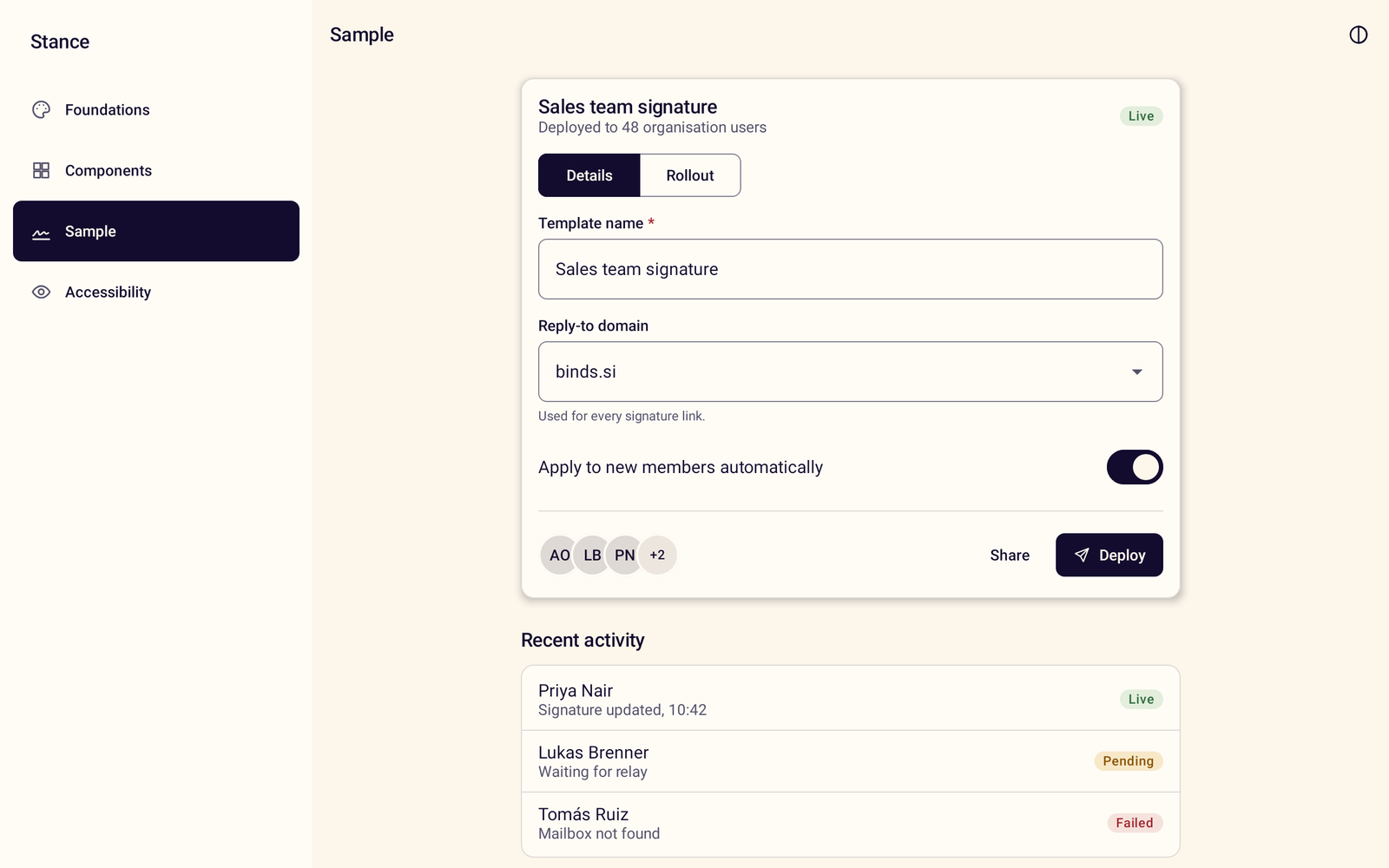
Adapts to the window
Bottom bar, rail or drawer, chosen by the space available.
TalkBack ready
Roles, states and live regions on every component, with 48dp touch targets.
Scales with the system
Text in sp follows the user’s font size, tested at 200%.
Three appearances
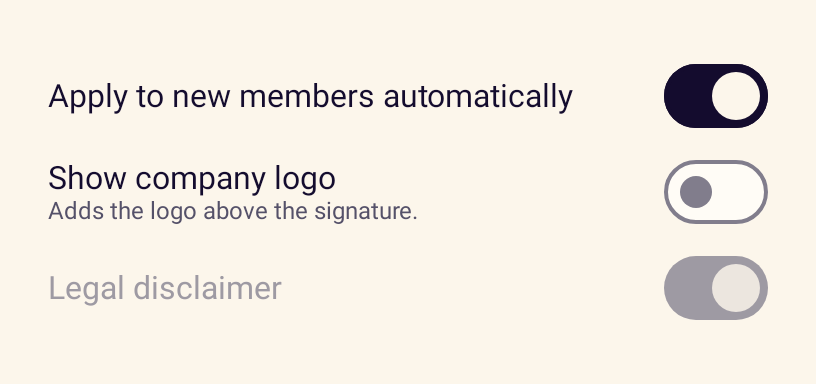
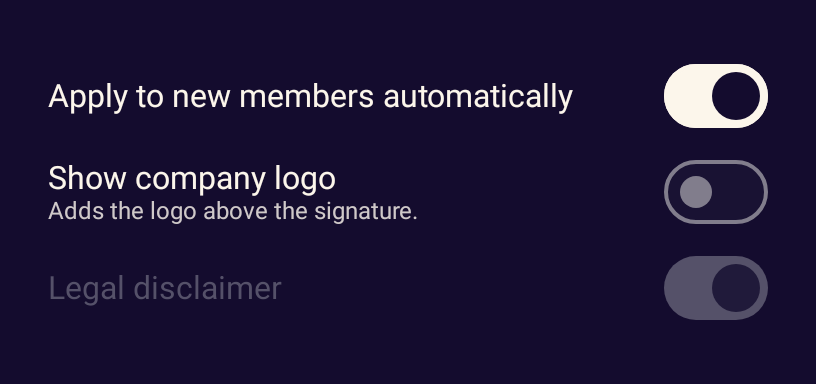
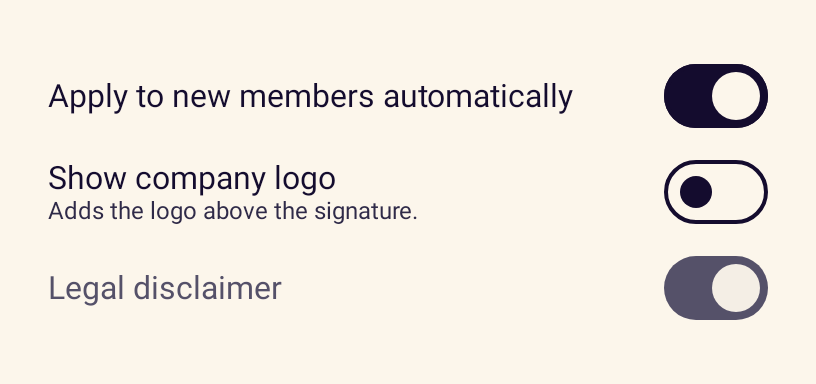
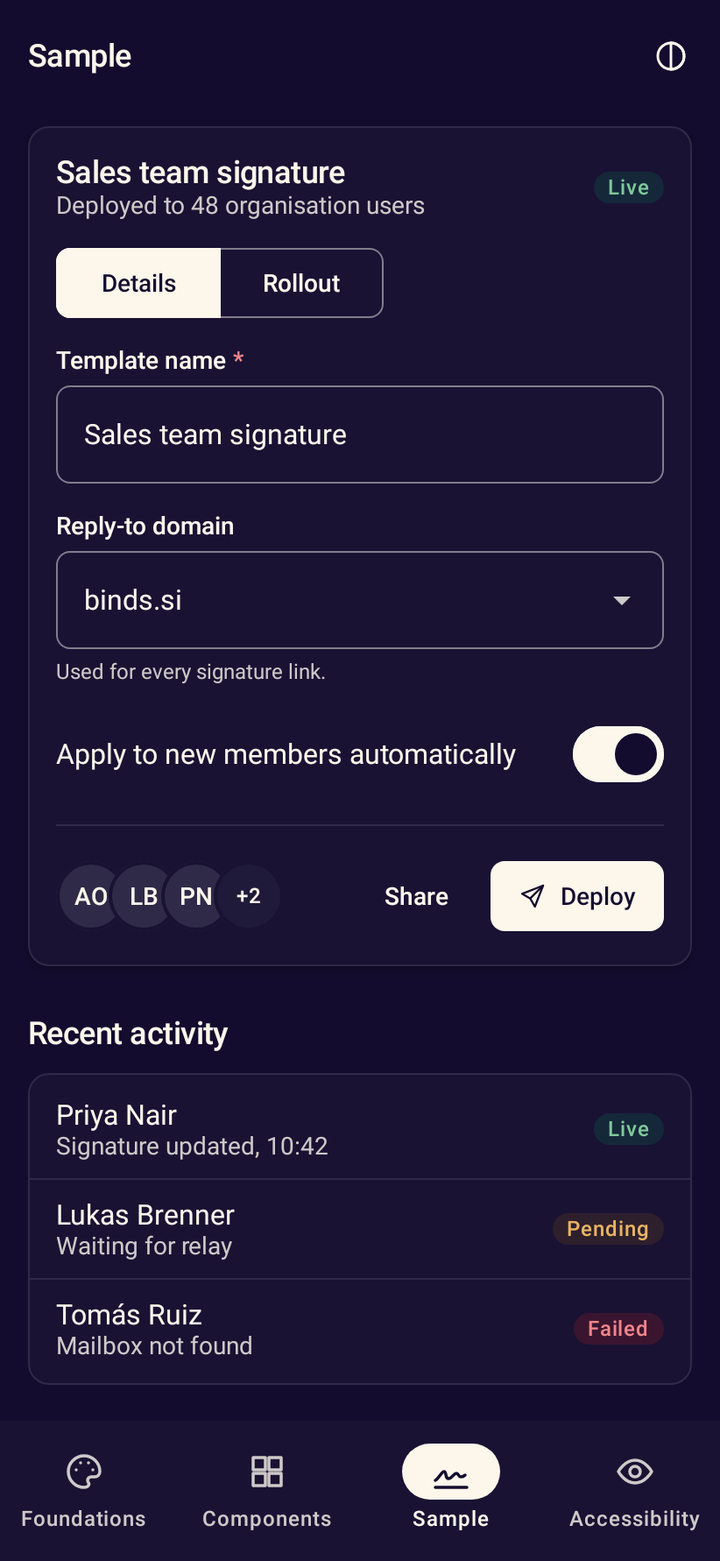
Light, dark and high contrast, following the system contrast setting.
Views welcome
Compose views and XML helpers bring Stance to existing screens.
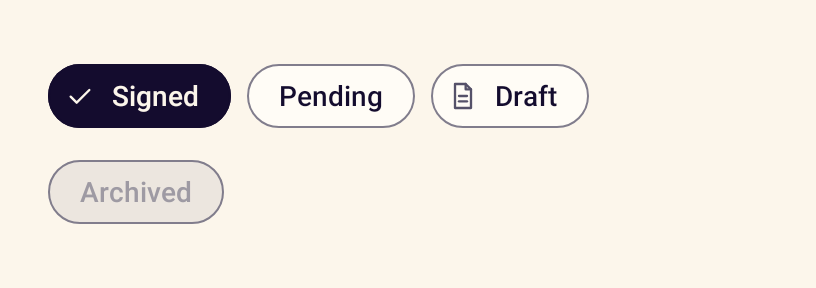
Phone. Tablet. Light and dark.
Up and running in a minute.
Android 7.0 (API 24) or later · Material 3 · Kotlin
Installation guideimplementation("com.bindshq:stance-compose:0.1.0")Reads like Jetpack Compose.
Small, composable APIs that follow the conventions you already use.
Theming Adaptive and Views@Composable
fun TemplateSettings() {
var name by remember { mutableStateOf("Sales team signature") }
var autoApply by remember { mutableStateOf(true) }
StanceCard {
StanceTextField(name, { name = it }, label = "Template name", required = true)
StanceSwitch("Apply to new members", autoApply, { autoApply = it })
StanceButton("Deploy", onClick = {})
}
}68 components.
49 build on system controls. The rest fill the gaps the platform leaves.
Questions.
Stance for Android is the Jetpack Compose library of Stance, the open-source design system by Binds. It provides themed composables built on Material 3 that share their design tokens with the web and iOS libraries.
Stance builds on Material 3 components for behaviour, semantics and accessibility, and maps its own tokens onto the Material theme. Any Material component used inside StanceTheme is on brand automatically.
Android 7.0 (API 24) and later. The library depends only on AndroidX, Jetpack Compose and Material 3.
Yes. StanceAdaptiveNavigation switches between a bottom bar, a navigation rail and a drawer by window width, and StanceScaffold handles edge-to-edge insets and predictive back.
Yes. Components set TalkBack roles, states and labels, touch targets are at least 48dp, text scales with the system font size, focus is visible for keyboards, and swipe actions are exposed as accessibility actions.